
The smallest denomination of Indian currency may be the One Rupee coin that has today got immense historical importance, cultural weight, and utility in daily transactions. Although paper notes and digital transactions end up taking up a large portion of the stage in the current economy, the lowly one rupee coin has continued to serve as a symbol of the Indian monetary system, not just due to its practical purpose in economic terms, but because of its numismatic appeal as well.
This is a holistic blog, where we will learn all there was to learn about the one rupee coin, its origin and development, changes in design, material composition, collector variants and some other interesting facts that even the experienced currency lovers are unaware of. This guide is aimed at collectors, history enthusiasts and students as well as at just interested people on the currency of India.
And in case you ever want to sell or have the value of some rare or vintage rupee coins, places such Old Coins Buyer deals with buying, valuing, and preserving coins of collectors and enthusiasts of all denominations around India.
Background History: The One Rupee Coin: How It Came Into Circulation
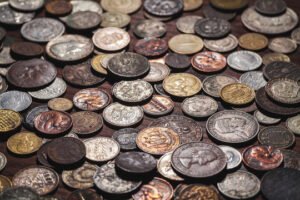
It will be worthwhile to travel in time in order to appreciate the one rupee coin.
The national currency system in India has developed through centuries with the influences of the rulers of the Mughal dynasty into the British Raj. Even the name of the coin (rupee) has got its name by the Sanskrit word Rupya – meaning a coin made of silver.
Early History
The rupee was initially made of silver which was brought about by Sher Shah Suri in the 16th century.
These coins were of the early rupees that were heavier and bigger than our modern coins.
The Indian currency was standardized during the British colonial rule, and later on it was issued by the British East India Company and the colonial government.
Post-Independence Changes
This was after the Indian government and the Reserve Bank of India (RBI) assumed the responsibility of issuing the money after India attained independence in 1947.
In 1950, the Government of India issued coins.
The one rupee coin was not an exception of this transformation, the coin remained one of the main denominations but changed in material, size, and design throughout the decades.
History of One Rupee Coin Material and Design.
The most interesting thing about the one rupee coin is the way it has physically developed.
Composition of Materials Over the Years
At the beginning, the coins were manufactured using precious metals such as silver. But with a change of currency requirements and expenses, came a change in metals:
- Pre-1960s: Coin minting was mainly done in silver.
- After 1960s: The Indian government switched to base metals as a result of the increase in the silver prices.
More recently, one rupee coins are manufactured out of stainless steel, which is more durable, resistant to corrosion and less expensive to produce.
Design Features
The face of the one rupee coin tells a story though it is a small coin.
Such design elements are usually common:
- Ashoka Lion Capital – This is the national symbol of India.
- Denomination (1/₹1) – not unmarked.
- Date of production – a valuable factor to collectors.
- Special symbols in some cases such as symbolic of agriculture, culture or milestones.
Not only is aesthetically each change, but also represents a wider economic and historical change.
The One Rupee Coin, Everyday Use
Although digital payments are on the increase, one rupee coins still matter.
Practical Usage
- Minor retail purchases such as tea, fruit, transportation.
- Precision change – some stores count coins to prevent rounding off.
- Tipping – in the markets, small restaurants, and casual places.
- Coins stand a lower change of lost in the digital changes since they satisfy a physical demand – precise financial dealings.
Why It Still Matters
Despite UPI, wallets, and online banking, not all Indians, in particular in the rural ones, have ceased to rely on cash. One rupee coin is easily the tiniest measure that keeps day-to-day business running effectively.
Numismatic Value: Not Every Rupee Coin Is a Rupee
To the greater part, a rupee coin is nothing but a rupee.
However, there are coins which to collectors will have a much greater value than their denominations.
What Makes a Coin Valuable?
A one rupee coin may be more collectible and more marketable due to the following factors:
- Date of coinage (particularly early coins)
- Rare mint errors
- Limited editions
- Historical significance
- Condition (uncirculated) Condition (mint)
An example is the price of one rupee coin minted in the early years after independence which can fetch high prices among the collectors.
This is where professional appraisers as in the case of Old Coins Buyer are useful- assisting hobbyists in locating and auctioning off of rare coins at good prices.
Cool Variation and Specialized Editions
Indian government has issued design-based special coins occasionally to remember the important events and milestones.
Examples include:
- Centenary celebrations
- National anniversaries
- Cultural or historical monuments.
These rarities introduce variety into the one rupee coin group, and are of interest to numismatists everywhere.
The Making of How One Rupee Coins: Minting
The art of minting coins requires accurate metallurgy and coin production.
Steps in Coin Production
- Design Creation – the designers prepare the coin.
- Die Making – steel dies of strong hardness are cut.
- Preparation of Blanks – metal blanks are cut and polished.
- Making marks – coins are beaten with tremendous blows to stamp designs.
- Quality Inspection – The only mint-standard coins are issued.
The outcome is a minor yet significant economic infrastructure.
One Coin of Rupee in the Digital Pay Era
India is a country of digital payments, and there is an application, QR code, and mobile wallet all around.
But where does the one rupee coin come in?
Cash Isn’t Dead
Although the use of e-payments is on the increase, coins remain important:
- Small towns with poor internet connection.
- Small traders who are cash-strapped.
- Day-to-day purchases where low amount transactions are not convenient through digital payment.
One rupee coins continue to be minted by the RBI as they are still required since they are needed in their physical form, particularly to change hands.
How to Determine whether Your One Coin of a Rupee is worth more than ₹1
It is a question most people who own coins ask themselves mostly when they discover aged or strange coins.
Here’s how you can evaluate:
Check the Year
Coins that are older (and indeed coins that are older than the early post-independence years or even earlier), may be more valuable.
Look for Errors
Mint mistakes such as bad printing or inscriptions or strange forms may render coins rare and valuable.
Condition Matters
No coin with clear markings that are not circulated attract a higher price.
Seek Expert Opinion
Dealer – Professionals like Old Coins Buyer can examine your coins and provide you with the information whether they are collectible or not.
One Rupee Coins Myths and Fun Facts
The following are some of the bizarre things that make the one rupee coin more interesting:
- Weight differences in some of these coins could also have been caused by the shortages of the metal used in the coins.
- A one rupee coin with some mint errors would bring hundreds or even thousands of rupees.
- In certain areas of India, coins of one rupee had become so expensive that they were hoarded by people deliberately.
These amusing facts indicate that even such simple things may have concealed histories.
What Can we Expect of the One Rupee Coin? Future
In the future, it is possible that a couple of trends might affect the purpose of the one rupee coin:
The Metal Changes and Production Changes.
The minting technology is being developed further and the coin material can continue to be developed to keep the costs low.
Digital vs Physical Money
Demand of cash can go down, and coins will not vanish in the nearest future because of the reasons stated above.
Collector Interest
Older coins will have increased value to the collector as time passes by – so it may have a market premium to rare coins.
The One Rupee Coin – Small but Significant.
This one rupee coin may look as a small metal flake, but its tale is anything but that. Since the history of India and the recent usage, and appeal amongst collectors as well as their relevance in the culture, this coin is not only a symbol of money, but a symbol of the changing economic history of India.
It has a story behind it, whether you are dealing with a single rupee coins at a tea stand, detecting some rare coin editions or immersing yourself in numismatic collection.
But when you are just as curious about some rare one rupee coin in your pocket or in your drawer, think of Old Coins Buyer: he can help you know what it is really worth, and how old it is.
Frequently Asked Questions
- Why is the single rupee coin still in use in the digital world with digital payments going around?
On the one hand, digital payments are trendy, but on the other hand, most small transactions are still based on cash, particularly in regions with scanty digital infrastructure. Coins help fill this gap. - Do we have one rupee coins of silver?
No- modern one rupees are normally manufactured using stainless steel. Previous models could have involved the usage of silver or other metals depending on the time. - Is it true that a single rupee coin will be worth more than ₹1?
Yes! Vintage coins, coins with errors, or issues of limited edition may be more expensive to collectors. - Tell me, am I to tell whether my one rupee coin is valuable or not?
Examine the year, condition, mint markings and other unusual characteristics. To have a professional appraisal, business such as Old Coins Buyer can be utilized to appraise and purchase rare coins. - Why restore the design of the one rupee coin?
Design modifications include changes in government, commemoration, and security functionalities, and cost.