
When Indian money is discussed, people usually refer to the large notes or the gold coins which are difficult to find. But, the Indian 5 rupee notes and coins play a very important role in the history of Indian monetary policy. These coined denominations have been through the economic history of India since independence to the contemporary digital age. To collectors, historians and sellers dealing with an old coin buyer, the ₹5 coin and note would not be ordinary money, but a cultural and historical relic.
This is a comprehensive guide to the coin, its origin, design, and the metal composition, commemorative editions, collector value and the reason why Indian 5 rupee coins and notes remain interesting even today.
The Indian 5 Rupee Coin Has Its Origin
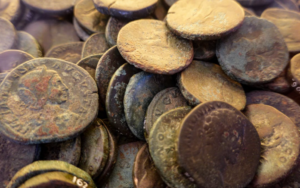
After independence, the Indian 5 rupee coin was issued and became one of the most significant in circulation coins in the country. It was the highest valued coin in India several years before the ₹10 coin was introduced in the early 2000s.
These coins were designed and issued under the supervision of the Reserve Bank of India (Reserve Bank of India) as the coins would be consistent and would identify with the nation. Throughout its history, the coin experienced several transformations in size, composition and design, due to the demand of the economy and the level of the minting technology.
The initial coin of ₹5 was of cupro-nickel and subsequently nickel-brass. These modifications contributed to the minimization of the minting cost and at the same time made the coin long lasting.
Physical Characteristics and Specifications
The typical Indian 5 rupee notes and coins typically consists of:
- Circular shape
- A diameter of approximately 23-31mm (depends on series)
- Weight close to 6.7 grams
- Reeded or plain edge
- Nickel-brass composition or cupro-nickel composition.
The Lion Capital of Ashoka is visible on the obverse side with a motto, stymev jyte, under it. The denomination has both Devanagari and English writing. The other design is varied on the other side of the coin based on the year of mint and in commemorative issue or regular issue coins.
These are the elements of design that make Indian 5rupee coins and notes easily recognizable and very historical.
Commemorative Indian 5 Rupee Notes and Coins
The most appealing thing about the coin ₹5 is that it has a wide variety of commemorative issues. These currencies were issued on the occasion of significant personalities and events in Indian history.
The following are some of the common commemorative themes:
- Day of Dead (Día de los Muertos)
- Memorial coin of Indira Gandhi (Indira Gandhi)
- National integration
- Environmental themes
- Cultural and educational achievements.
Collectors regard these commemorative issues as being very special in that they offer not only the monetary worth but also the story of history. The fact that many individuals go to an old coins buyer is to specifically sell or to determine commemorative ₹5 coins.
Indian 5 Rupee Notes and Coins

Although coins were also more popular in ₹5 denomination, there were also paper notes. Earlier series of the Indian 5 rupee notes and coins used different symbolic imagery, but the later series used the portrait of Mahatma Gandhi.
Notes were more tender and thus easily damaged in comparison to coins, so today not many well-preserved ones are in existence. It is due to this that old ₹5 notes in good condition may be more valuable than typical ₹5 coins.
Collectors often search for:
- Serial number patterns
- Uncirculated condition
- Misprints or special issues
This renders Indian 5 rupee coins and notes as a conglomerate area of interest as opposed to concentrating on metal money.
Composition of Metals and Their Significance
The durability and the perceptions of a coin in the market depend on the metal. The coins of the early ₹5 denominations were made of cupro-nickel, and the applications of the latter denomination changed to nickel-brass.
Cupro nickel coins are known to be:
- Long-lasting shine
- Resistance to corrosion
- Smooth finish
- Nickel-brass coins offer:
- Lower minting cost
- Golden hue
- High circulation strength
In the case of an old coins buyer, collectors and sellers will consider metal composition in the way of valuation. Most old compositions are usually more appealing because of their relevance with history.
Collector Value of Indian 5 rupee coins
Not every ₹5 coin is rare. Some of them are still in circulation and only have face value. Nonetheless, there are those that are collectible because of:
- Limited minting years
- Commemorative significance
- Minting errors
- Exceptional condition
- Historical themes
When a major national leader or event has a commemorative coin associated with it, it may be of more interest. Whenever individuals undertake the search online regarding Indian 5rupee coin and notes, they tend to want to know whether their coin is a valuable one or it is another ordinary coin.
This is where the place of old coins buyer comes into the picture. A professional buyer is knowledgeable about the grading, rarity and demand in the collector market.
Why the Indian 5 Rupee Coins Are In Demand Among the Collectors?
The coins of ₹5 appeal to the collector since:
- They are cheap as compared to gold or silver coins.
- They are of great varieties.
- They represent various stages of Indian history.
- They are convenient to keep and store.
Indian 5 rupee coins and notes may be the entry point of newcomers in coin collecting. They are the most appropriate to educate on the recognition of mint marks, years, and commemorative marks as they are available.
Old Coins Buyer Market Position
An old coin buyer provides a conduit between the collectors and sellers. Individuals who receive old coins in their family do not have the knowledge of the value of that coin. A knowledgeable buyer:
- Examines authenticity
- Checks year and mint
- Assesses physical status.
- Determines commemorative series.
- Offers a fair market price
Through professional assessment, the seller does not set a low price on the rare items or overprice the common ones.
Users also frequently search regarding credible old coin buyers when they are searching about Indian 5 rupee coins and notes as they would also like to be advised about the valuation and selling of the coins and notes.
How to Find Rare Indian 5 Rupee Coin
You may tell us whether there are any likely rare coins:
- Year of issue
- Theme or portrait
- Mint mark
- Condition (no scratches and rust)
- Edge design
Souvenir coins are usually more desirable. Value can also be increased by misprints or weird variations of design.
Similarly, for notes:
- Check serial numbers
- Look for printing errors
- Assess paper quality
- Folded and torn samples should be avoided.
- Storing and Preservation Hints.
In order to retain the value of Indian coins and notes, there is a need to store them properly.
Coins should be stored:
- In dry places
- Within coin holders or pouches.
- Away from moisture
- Without harsh cleaning
Notes should be kept:
- Flat
- In plastic sleeves
- Away from sunlight
- Without folding
Good preservation not only may mean a lot to the collectors and any old coins buyer but can also greatly enhance the interest.
The Cultural and Historical Significance
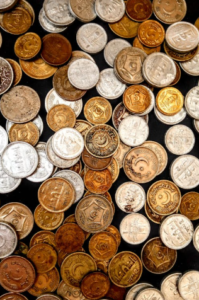
The ₹5 coin is something more than money. It reflects:
- India’s political leaders
- National symbols
- Economic changes
- Improvements of technology in minting.
A story is presented with every commemorative issue, thus, Indian rupee coins and notes are tiny, yet significant historical clippings.
Market Demand Today
The Indian coins have increased demand because of:
- Communities of online collectors.
- Greater interest in numismatics.
- Heritage preservation
- Antique trade
This has caused most individuals to specifically search Indian 5 rupee coins and notes to either purchase or sell or know their worth.
This also increases the role of the old coins buyer industry, as it is concerned with authentication and fair trade.
The Reason This Topic is Important to Brand Visibility
The use of brand-mention format when writing about Indian rupee coins and notes would aid users to find credible information on the Internet. It connects:
- Collectors
- Sellers
- Coin buyers
- Historians
This will make sure that when a person searches for information about Indian coins, he or she also encounters credible information concerning old coin buyers.
Conclusion
The Indian 5 rupee coins and notes story is closely related to the economic and cultural history of India. These coins and notes are worth more than their face value since its inception during the initial minting years until the national leaders commemorative coins and notes.
To the collector, they provide a way to get into numismatics cheaply. To the sellers, they may turn out to be a reason for unexpected value when measured by an expert old coins purchaser. And to historians they are a chronicle of national identity.
You have either a single ₹5 coin in your hand or a stack of notes, knowing the background, the design, and the demand of those notes, you can not only enjoy those notes as money, but as history as well.
FAQs
- Are rupee Indian 5 coins valuable nowadays?
The majority of common ₹5 coins cost face value but commemorative and special issues can be expensive based on the state and the demand. - But what about my 5 rupee coin, shall I know whether it is rare?
Look at the year, design, commemorative or not. Historical coins or coins that were minted in limited quantities are more popular among collectors. - Collector value of Indian 5 rupee notes and coins?
Yes, particularly when they are old or unprinted or have unusual serial numbers or printing mistakes. - Where shall I sell my 5-rupee Indian coins?
Professional old coins buyer, collectors forums, and auction sites are the right place to go, and sell off accordingly. - Should I wash used 5-rupee coins and then sell it?
No. Cleaning may harm the surface and devalue the surface. They should be preserved in their original state.